
Shaping Lifelong Health
Challenge Theme

About the Challenge
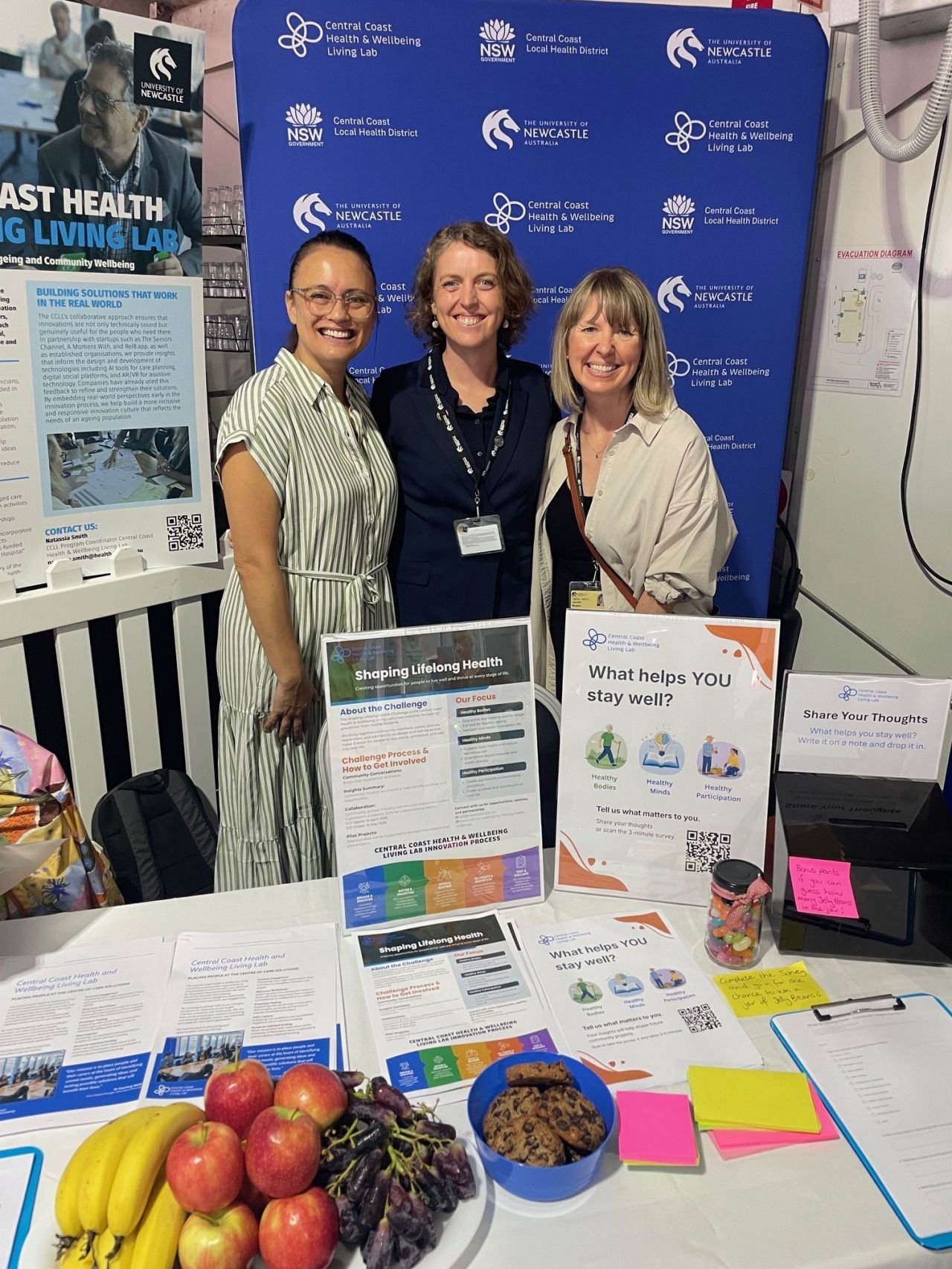
The Shaping Lifelong Health Challenge is the Central Coast Health & Wellbeing Living Lab’s new initiative, focused on prevention from midlife onwards. It brings together community members, carers, services, researchers and partners to create opportunities for people to live well and thrive into later life.
Together, we can build opportunities that make it easier for people to live well and thrive at every stage of life.
Our focus
This Challenge explores three key themes:
Healthy Bodies: moving well, nutrition and oral health
Healthy Minds: brain health, dementia prevention and digital inclusion
Healthy Participation: age-friendly places, purpose and contribution
What we’ll do together
Over the coming months we’ll follow these steps:
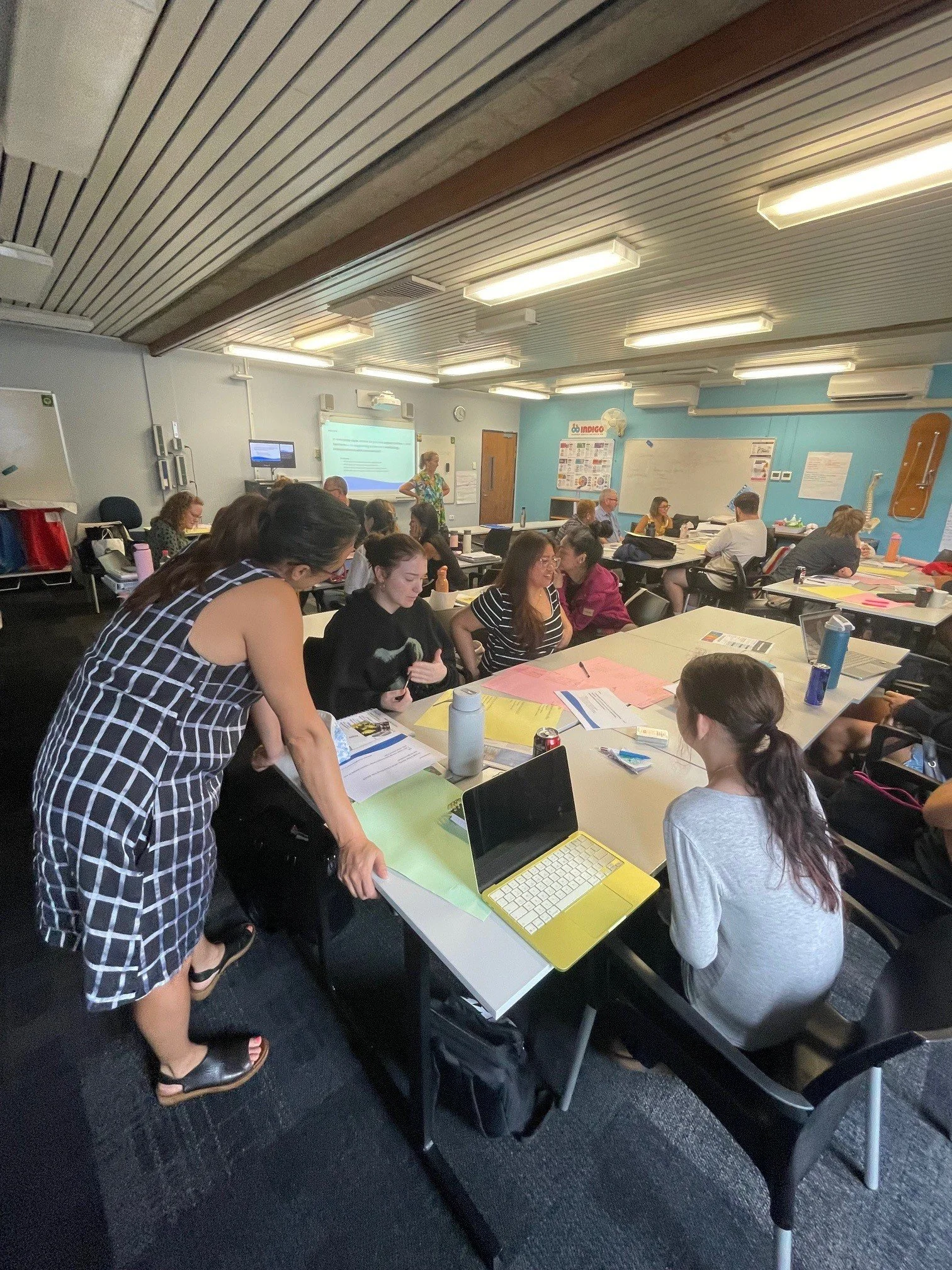
Community consultation – workshops and conversations with local groups and individuals.
Sharing insights – feeding back community priorities in a plain-language summary.
Collaboration – inviting services, researchers and partners to propose ideas through an Expression of Interest (EOI).
Piloting projects – selected projects will be supported for development and testing.
What we’ve heard
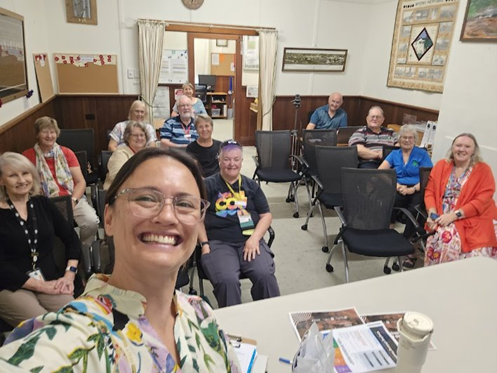
We’ve been speaking with community members, local groups, services, and partners across the Central Coast to understand what supports wellbeing as people age, and what gets in the way.
These conversations highlight how people experience staying well in everyday life.
Key insights include:
Wellbeing is shaped by purpose, connection, and participation
People spoke about staying well through having something to look forward to, feeling useful, and staying connected to others.Physical activity is most sustainable when it has a social dimension
People described staying active in different ways, from structured activities like tai chi, gym classes, and team sport to walking and volunteering. What made it stick was having somewhere to go or someone to go with.Identity and confidence influence whether people engage
Changes such as retirement, loss, or shifts in independence can affect how people see themselves and whether they feel comfortable participating.How opportunities are designed affects who shows up
People are more likely to engage when activities feel welcoming, flexible, and low-pressure, and when they fit into real life.Access shapes what is realistically possible
Transport, cost, and service availability were raised, alongside challenges in knowing what exists and how to find it.
Explore the full community insights (coming soon)
In the meantime, you can explore the community workshop summary that helped kick off the Challenge:
Read the Shaping Lifelong Health workshop summary (September 2025) →
Get involved
We’re inviting people, organisations, and researchers to be part of the Shaping Lifelong Health Challenge.
This next phase focuses on turning what we’ve heard from the community into practical ideas, partnerships, and projects that support people to stay well, independent, and connected as they age.
There are different ways to get involved, depending on what you’re bringing — whether that’s a problem or opportunity, an idea, research expertise, or your perspective as a community member.
Expression of Interest applications open on 15 April 2026.
In the meantime, you can explore the pathway options below to learn more about how you might get involved and prepare your submission.
Why it matters
By age 65, two in three Australians are living with at least one chronic condition, and nearly half live with two or more (Australian Institute of Health and Welfare, 2022). Dementia is now the second leading cause of death (ABS, 2022), and social isolation remains a powerful predictor of poor health outcomes.
The good news is prevention works. Healthy habits, strong social connections and supportive environments in our 40s–60s can delay or prevent illness, frailty and decline. Every $1 invested in prevention is estimated to return about $14 in health and social benefits (Australian Government, National Preventive Health Strategy, 2021).

Ways to get involved
Each option below outlines a different way you can contribute — from identifying a problem to developing and testing ideas.
To get started, select the pathway that best fits you and complete the Expression of Interest form within that section.
-
Seeing a problem or opportunity you’d like to explore
You might fit here if you’re noticing a challenge, gap, or opportunity in your organisation, service, or community and want to explore what could be done about it.
This could relate to how people stay well, maintain independence, or remain connected as they age. It may be something people are experiencing barriers with, or an opportunity to build on what is already working.
You don’t need to have a solution. In many cases, projects begin with a shared understanding of the issue before any ideas are defined.
Through the Living Lab, you’ll work with community members, researchers, and partners to better understand the situation and develop and test possible ways forward. This may involve workshops, conversations, or trialling ideas in real-world settings.
Your level of involvement can vary depending on your capacity, from helping shape the project’s focus through to playing a more active role in guiding and testing an approach.
If you already have a specific idea or program you’d like to develop or test, you may prefer to apply as an Idea or Solution Partner.
📝 Submit an Expression of Interest as a Problem or Opportunity Lead →Tell us about a problem or opportunity you’d like to explore through the Living Lab.
-
Bringing an idea or approach you’d like to develop or test
You might fit here if you have an idea, program, or approach that could support people to stay well, independent, or connected as they age, and you’re looking to develop or test it in a real-world setting.
Your idea could be at any stage. It might be something you’ve been thinking about, an existing program you’d like to strengthen or adapt, or an approach that hasn’t yet been tested with the community.
Through the Living Lab, you’ll work with community members, services, researchers, and other partners to further shape your idea and explore how it could work in practice. This may involve co-design workshops, refining the approach, or piloting the idea in a local setting.
This pathway can help you test feasibility, build evidence, and strengthen an idea to support future funding, implementation, or scale.
Your level of involvement can vary depending on your capacity, from contributing an idea and participating in its development to playing a more active role in leading and testing a pilot.
If you’re still exploring a need or opportunity and don’t yet have a specific idea, you may prefer to apply as a Problem or Opportunity Lead.
📝 Submit an Expression of Interest as a Idea or Solution Partner →
Share your idea and we’ll work with you to shape and strengthen it through collaboration.
-
Bringing research expertise or exploring research opportunities
You might fit here if you’re a researcher or part of a research team interested in working on research grounded in real-world community needs.
Researchers can get involved in two ways:
Develop a project through the Living Lab
You bring an existing research idea or early-stage concept and work with the Living Lab to shape it through community input and partner involvement. This may include refining the project’s focus, exploring local needs, co-designing approaches, and strengthening the work to support future funding or implementation.Contribute to a project emerging through the challenge
You express your interest in contributing your expertise to projects led by community or service partners. This may include supporting research design, evaluation, or evidence generation.
If you choose to express your interest as a contributor, we will use this information to understand your expertise and connect you with relevant projects and opportunities that emerge from the challenge.
In both cases, you will work alongside community members, services, and other partners. The Living Lab provides a structured way to shape research questions, co-design approaches, and develop and test ideas in real settings.
This opportunity is suited to researchers who are interested in strengthening the relevance and impact of their work, building cross-sector partnerships, and contributing to work that moves from community insight through to development and evidence.
You don’t need a fully developed proposal, but you should be able to describe an area of interest, a potential idea, or how your expertise could contribute.
-
Interested in being involved and sharing your perspective
You might fit here if you’re interested in being part of conversations, workshops, or activities that explore how people can stay well, independent, and connected as they age.
You don’t need any specific experience or background — just an interest in the topic and a willingness to share your perspectives and experiences.
As a Community Contributor, you may be invited to take part in workshops, provide feedback on ideas, or help shape and test new approaches. Your input will help ensure that projects reflect real experiences and what matters most to people in the community.
There’s no ongoing commitment — you can choose to be involved in the opportunities that interest you.
📝 Submit an Expression of Interest as a Community Contributor →
📄Next steps
Once you’ve identified the pathway that best fits, you can begin preparing your Expression of Interest.
EOIs open: 15 April 2026
EOIs close: 15 May 2026
👉 Access the Expression of Interest (EOI) Information Pack →
Includes application questions, guidance, and selection criteria to help you prepare your submission.
💬Not sure where you fit?
If you’re unsure which pathway is right for you, or would like to talk through an idea or opportunity, we’re happy to have a chat.
We’re happy to help you find the right fit.
Contact Natassia Smith (CCLL Coordinator): ccll@newcastle.edu.au
Curious about how we approach innovation?
We use a Living Lab approach to bring people together to design, test, and deliver real-world solutions.